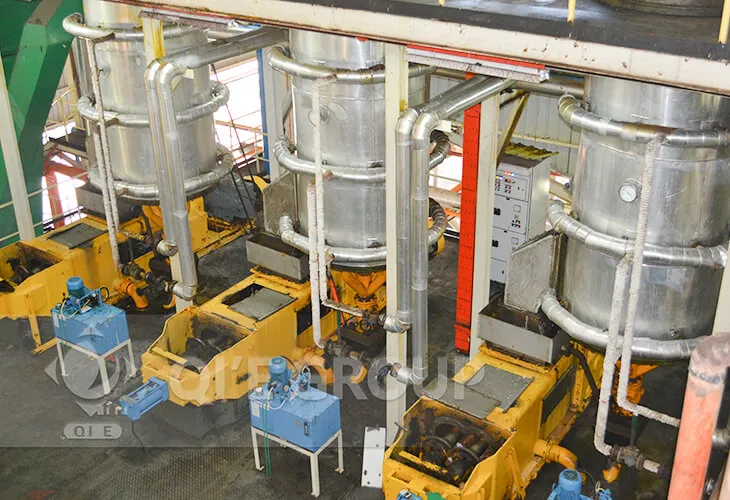
Integrated pressing and filtration
Pressing and oil filtration can be performed as part of the same operating workflow. This may simplify production management and reduce the need to transfer crude oil between separate processing stages.
Equipment and market evaluation
An automatic oil press can be a practical investment for small-scale processors that need to combine oil extraction and filtration in one compact system. The right decision depends on more than the machine price: buyers should compare expected raw material supply, processing capacity, labor availability, electricity costs, oil quality requirements, maintenance conditions and local market demand.

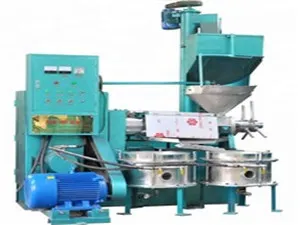
The automatic oil press supplied by Qi'e Grain and Oil Machinery Co., Ltd. is designed to carry out pressing and fine filtration within an integrated operating process. A forced feeding device supports more even feeding, while the pressing chamber uses a screw shaft to move and compress prepared oilseed material.
During pressing, friction and pressure help release oil from the oilseed embryo. The oil then passes through the filtration system, helping reduce impurities in the crude oil. This integrated arrangement may reduce handling steps and improve operational convenience for processors who want a compact small oil mill equipment solution.
An automatic oil press is more likely to be suitable when your business has a dependable supply of oilseeds, a clear sales channel for edible oil, limited production space, and a need to reduce manual filtration and handling. It requires more careful evaluation when raw material quality is inconsistent, local food regulations are strict, or after-sales service and spare parts are difficult to access.
The equipment should be evaluated against actual operating conditions rather than against a general “best machine” claim.
Pressing and oil filtration can be performed as part of the same operating workflow. This may simplify production management and reduce the need to transfer crude oil between separate processing stages.
The machine is described for processing oilseeds including peanuts, soybeans, rapeseed, sesame, sunflower seeds and other crops. Actual suitability should be confirmed through material testing and process settings.
The supplied product information indicates that approximately 10–20 square meters may be sufficient for the machine itself and related small-scale production needs. The final layout should also allow for storage, cleaning, safety access and packaging.
Automatic feeding and filtering can help reduce repetitive handling. The actual labor requirement depends on feeding, seed preparation, cleaning, packaging, quality inspection and material movement.
| Evaluation area | Why it matters | Information to confirm |
|---|---|---|
| Processing capacity | Capacity affects equipment utilization and payback potential. | Expected daily raw material volume, operating hours and crop type. |
| Oil yield | Yield influences revenue and the value of residual oil in the cake. | Seed moisture, cleanliness, variety, pretreatment and residual oil content. |
| Filtration results | Oil clarity and impurity control affect further processing and customer acceptance. | Filtration method, oil temperature, filtration rate and required product specification. |
| Operating cost | Electricity, labor, consumables and cleaning costs directly affect profitability. | Local power price, staffing costs, working hours and maintenance schedule. |
| Service support | Downtime can affect production continuity and customer commitments. | Installation guidance, operator training, spare parts and response arrangements. |
The automatic oil press is intended for processors working with multiple oil crops rather than a single raw material. Common application materials identified for this equipment include:
For processors in Asia, Africa and South America, regional availability of raw materials, seasonal purchasing patterns, local consumer preferences and food regulations should be included in the investment analysis.
The purchase price is only one part of the investment. A practical evaluation should include the following cost categories:
Reference calculation supplied for the equipment
The product information gives an illustrative small-scale example based on processing 500 kg of crude oil per day: a stated comprehensive cost of RMB 6,778, output value of RMB 8,000 and calculated daily profit of RMB 1,222. These figures should not be treated as a guaranteed return. Actual results will vary with seed prices, oil yield, selling price, electricity, labor, utilization, local regulations and other operating conditions.
The supplied product information reports several performance comparisons with older equipment. They are useful as points for technical discussion, but should be verified under comparable materials and operating conditions before investment approval.
| Reported factor | Product information | What buyers should verify |
|---|---|---|
| Oil yield | Normal oil yield may be 2–3 percentage points higher than older equipment. | Crop variety, moisture, pretreatment, press settings and residual oil in cake. |
| Energy use | Electricity use may be reduced by 40% under the same output conditions. | Motor configuration, operating hours, local voltage and actual throughput. |
| Labor requirement | The product information states that labor may be reduced by 60%, with one to two people organizing production. | Whether seed preparation, packaging, cleaning and quality control are included in the staffing estimate. |
A reasoned buying decision starts with comparable operating conditions.
Qi'e Grain and Oil Machinery Co., Ltd. provides oil pressing equipment, oil production line equipment and oil refining equipment, together with project design, installation guidance and technical service. With a focus on technology, quality and customer support, Qi'e works with B2B customers to assess whether an automatic oil press matches their raw materials, production scale and regional market requirements.
 58
|
 oil press equipment maintenance operational stability fault warning daily maintenance Qi'e Grain and Oil Machinery Co., Ltd.
312
|
oil processing complete equipment edible oil production line oil pressing equipment edible oil refining equipment Qi'e Grain and Oil Machinery Co., Ltd.
372
|
Qi'e Grain and Oil Machinery Co., Ltd. automatic oil press market outlook integrated pressing and filtration small and medium-scale oil mill investment oil processing equipment evaluation
350
|
oil press procurement selection misunderstandings low price trap production line coordination Qi'e Grain and Oil Machinery Co., Ltd.
162
|
oil press machine purchase mistakes equipment total cost oil material compatibility production line capacity Qi'e Grain and Oil Machinery