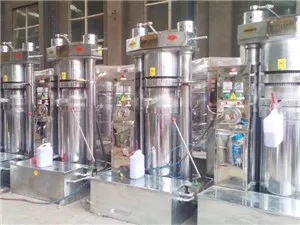
Automatic oil pressing and filtration for practical small-scale oil processing
Qi'e Grain and Oil Machinery Co., Ltd. provides automatic oil press equipment that combines screw pressing and crude oil filtration in one working process. This configuration is designed for users who need a practical way to process peanuts, soybeans, rapeseed, sesame, sunflower seeds, and other oil-bearing crops while keeping equipment layout, labor requirements, and daily operation manageable.
An integrated pressing and filtration system can be considered by small oil mills, regional oilseed processors, and small to medium-sized edible oil businesses. The appropriate choice should be based on the oilseed, required output, pretreatment conditions, oil quality expectations, energy use, available labor, and whether further refining will be required.
In a conventional arrangement, oil pressing and crude oil filtration may be handled as separate operations. An automatic oil press with integrated filtration coordinates these steps more closely. The machine presses the prepared oilseed and uses filtration equipment to remove suspended residue from the crude oil during operation.
Integrated filtration improves crude oil handling and convenience, but it should not be regarded as a complete edible oil refining system. If the finished product requires degumming, deacidification, decolorization, deodorization, winterization, or other quality-control steps, a suitable edible oil refining process may be needed after pressing and filtration.
A forced feeding device helps deliver prepared oilseed into the pressing chamber at a consistent rate, supporting continuous operation across changing working conditions.
The screw shaft moves the oilseed forward while pressure and friction inside the chamber release oil from the prepared material.
The crude oil passes through a fine filtration system. Increased filtration pressure and oil-guiding technology support the removal of suspended solids.
Pressing and filtration take place in a coordinated workflow, making the collected crude oil easier to handle before storage, further processing, or refining.
During pressing, friction and pressure can increase the temperature of the oilseed material. This may help reduce oil viscosity and support oil release. Actual oil yield and oil quality depend on the crop variety, moisture, preparation method, pressing conditions, machine adjustment, and operating practice.
| Application | Why evaluate an integrated oil press |
|---|---|
| Small oil mills | A compact pressing and filtration workflow may help simplify the initial production layout. |
| Regional oilseed processors | Multi-crop applicability can support processing of locally available oilseeds, subject to testing and configuration. |
| Small and medium-sized edible oil businesses | The equipment can be assessed when the business needs straightforward operation, manageable labor input, and filtered crude oil for further handling. |
An automatic oil press should be evaluated as part of the complete oil processing plan rather than by machine name alone. Buyers should confirm the following points with the supplier:
Oilseeds should be cleaned and prepared according to their characteristics. Moisture, particle size, shell content, and heat treatment can influence feeding stability, pressing behavior, and oil yield.
Operators should monitor feeding, pressing pressure, oil flow, filtration condition, temperature, residue discharge, and abnormal noise or vibration.
The filtered oil should be stored in suitable clean containers and evaluated against the intended product specification. Further refining may be required for commercial edible oil production.
The fully automatic oil press is intended to improve the coordination of feeding, pressing, and filtration. The supplied product information indicates potential advantages such as higher oil yield, lower labor demand, lower electricity consumption under comparable output conditions, and suitability for compact production spaces. These benefits should be treated as reference performance claims and verified through application-specific testing.
A supplied example describes a small-scale daily refining scenario using 500 kg of crude oil, with stated costs, output value, and profit. Because actual prices, seed quality, energy tariffs, labor costs, product prices, and refining requirements vary by location, this example should not be used as a guaranteed return or universal project forecast.
Qi'e Grain and Oil Machinery Co., Ltd. focuses on the research, manufacturing, sales, and service of grain and oil machinery. Its product scope includes oil pressing equipment, oil production line equipment, and edible oil refining equipment. For customers in Asia, Africa, South America, and other markets, the company can support project discussions around equipment selection, process design, installation, commissioning, and technical service.
The company’s approach is based on technology development, quality-oriented manufacturing, and service support. Rather than selecting an automatic oil press solely by advertised oil yield or price, customers can work with Qi'e Grain and Oil Machinery Co., Ltd. to review the oilseed, target capacity, workshop conditions, filtration expectations, local requirements, and possible downstream refining needs.
For an appropriate evaluation, provide the intended oilseed types, expected raw material input, desired operating schedule, available space, local power conditions, crude oil quality requirements, and whether additional refining will be included. This information helps determine whether integrated pressing and filtration is suitable for the project.
Explore the Automatic Oil Press 107
|
 grain and oil machinery solutions oil pressing equipment oil production line edible oil refining equipment Qi'e Grain and Oil Machinery Co., Ltd.
274
|
cold press oil machine hot pressing process solvent extraction oil yield Qi'e Grain and Oil Machinery Co., Ltd.
86
|
edible oil refining equipment degumming and deacidification decolorization and deodorization refining process Qi'e Grain and Oil Machinery Co., Ltd.
205
|
grain and oil machinery solution whole plant delivery equipment selection process design Qi'e Grain and Oil Machinery Co., Ltd.
165
|
grain and oil machinery industry efficiency and environmental protection automation upgrade technological innovation Qi'e Grain and Oil Machinery Co., Ltd.